
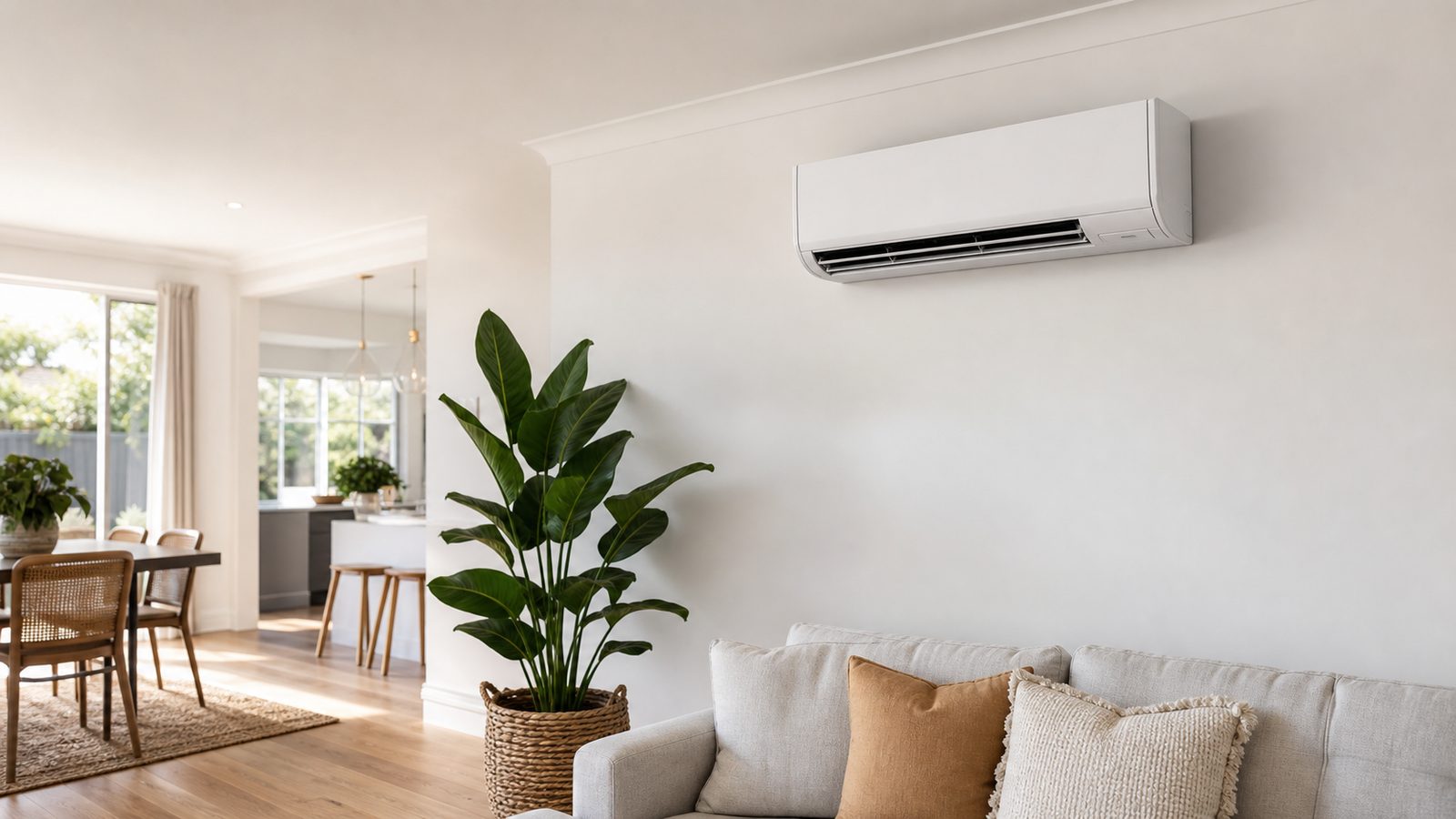
Describe the discomfort before changing settings
A room can feel cool at your chair while bedding, clothes or the air itself still feels damp. Start by describing what you notice rather than deciding the air conditioner is undersized. Is it a sticky feeling on your skin, a musty smell after starting the unit, condensation on a surface, or a room that becomes uncomfortable again soon after cooling stops? Those observations point to different investigations. A smell is not a humidity measurement, and a wet wall is not automatically an air conditioning problem.
Write down when it happens. Include whether it follows a shower, cooking, cleaning, rain or a period with the balcony doors open. In a Sunshine Coast home, compare your actual exposed rooms rather than assuming the whole property behaves like the nearest beach. A sheltered bedroom in Buderim and an open living room facing a Mooloolaba balcony may have very different moisture entry and airflow. Your own notes help a technician distinguish a pattern from an isolated uncomfortable afternoon.
Make a simple comfort log you can compare
If you have a room thermometer and humidity meter, put them away from the air outlet, direct sun, an open window and bathroom steam. Use the same position for each observation. Record the room reading, controller setpoint, operating mode, fan setting and whether doors were open. Treat inexpensive sensors as indicators of change rather than laboratory measurements. Two different meters placed in different parts of the room cannot provide a fair comparison of two operating modes.
Give the equipment time to settle after a change, following its operating instructions. Note the starting condition as well as the later result. A reading after guests arrive and leave a sliding door open should not be compared directly with a quiet evening in a closed room. You are looking for repeatable behaviour: comfort improves while cooling runs, discomfort returns when it stops, or moisture remains despite a stable room temperature. If the room is too uncomfortable to use, arrange an assessment rather than extending an experiment simply to collect more numbers.
Choose cooling or dry mode for the problem you have
Cooling mode is primarily used to lower room temperature. Dry mode is intended to reduce moisture, with operating behaviour that varies between models. Daikin's explanation of dehumidification describes dry mode as a moisture-control option; it does not make every air conditioner a humidity-controlled dehumidifier. Read the manual for your unit before assuming you can select a humidity target or independently adjust temperature and fan speed. Some controls deliberately limit those choices in dry mode.
If the room is both hot and uncomfortable, begin with normal cooling and a comfortable setting. If temperature is already comfortable but moisture is the main issue, check whether the manual recommends dry mode for those conditions. Compare the result using the same room and similar use. Do not select a very low temperature simply to force continuous operation and then tolerate being cold. That tells you the current arrangement is not meeting both comfort needs. A dedicated moisture strategy may be more appropriate, but it should follow assessment of the room and equipment.
Find the moisture that keeps entering the room
Look at daily routines before looking at the refrigerant circuit. Wet towels hung in a bedroom, drying laundry indoors, cooking without using the extraction provided, and shower moisture escaping through an open bathroom door can all change the conditions the air conditioner faces. Record those activities without trying to assign a precise quantity of moisture to them. Check whether existing extraction is actually operating and whether a blocked grille or closed door changes how that room behaves.
A balcony door left ajar can undermine a cooling trial because outdoor air keeps replacing treated room air. Close external openings during the comparison, then deal separately with the home's ventilation needs. Do not permanently block designed vents or assume air conditioning supplies fresh air. Most ordinary room split systems recirculate indoor air. If damp patches persist near a window, roof junction or plumbing wall, investigate the building moisture source as well. Cooling may change how the problem looks without fixing the water entry that caused it.
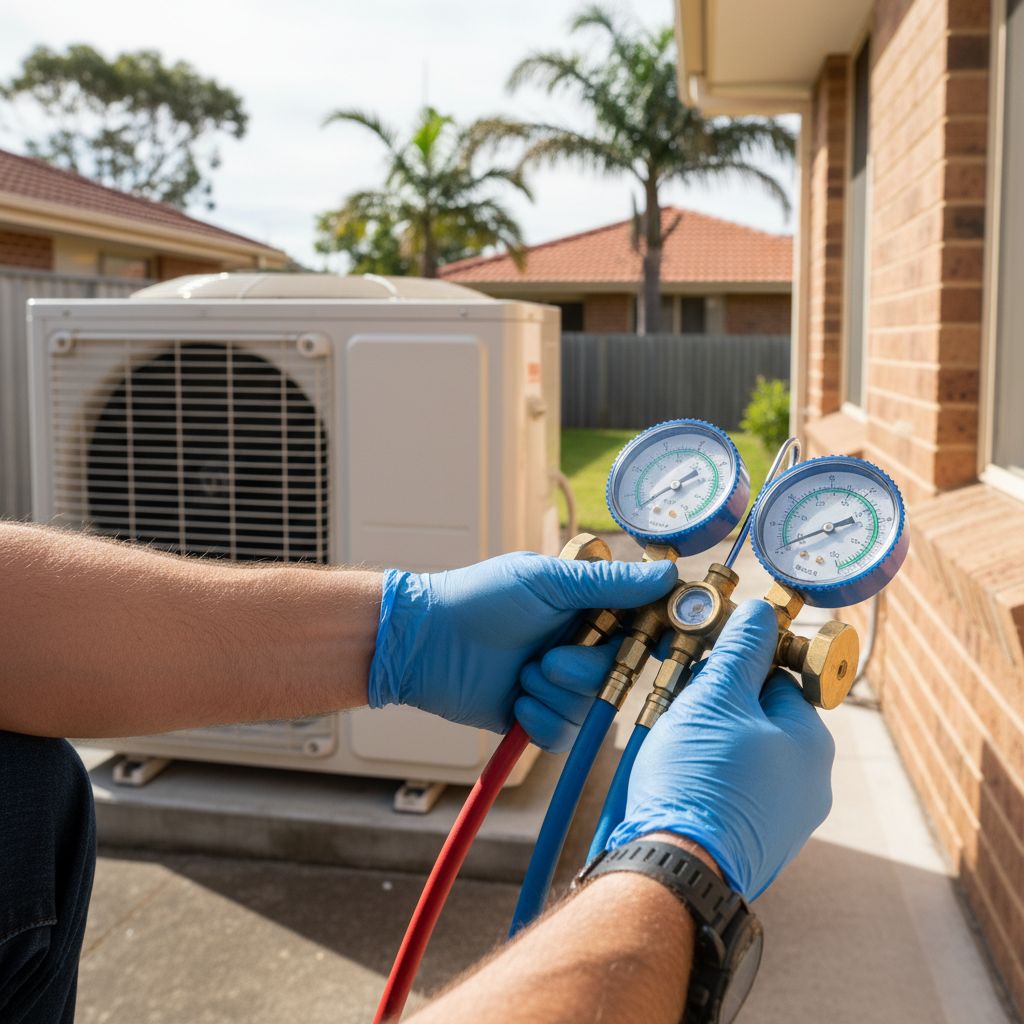
Check accessible filters and airflow safely
Look for curtains, furniture or stored items obstructing the indoor unit's intake or outlet. A tall cabinet installed after the air conditioner can change how air reaches the occupied part of the room. A clean-looking front cover says little about an internal coil or fan. Only remove user-accessible filters in the way your manual describes, with the unit switched off as instructed and safe access available. Different filter types have different cleaning and replacement requirements; a washable mesh filter and a specialist insert are not interchangeable.
Avoid spraying cleaner through the outlet or using a pressure hose on indoor equipment. Do not remove covers that expose electrical parts. If a filter is damaged, missing, inaccessible or repeatedly becomes dirty unusually quickly, record that for the service visit. Tell the technician whether airflow has changed since the system was new. A gradual reduction and a room that has always felt clammy are different histories. The service should investigate the reported behaviour, not merely leave the outside casing looking cleaner.
Ask about runtime and control before asking for more capacity
Watch what happens when the controller reaches its target. Does the room feel comfortable while cooling is active but clammy after it eases off? Does the system repeatedly stop and restart? These are useful observations, but they do not prove oversizing or a refrigerant fault. Control location, room layout, the unit's operating range and the amount of heat entering the space all matter. A controller near a cooled hallway can tell a different story from a chair beside a warm window.
Ask the assessor to explain how the system responds under the conditions when you notice the problem. A larger replacement selected solely from floor area may not answer that question. Request a room assessment that considers glass, shading, occupants, ceiling height and moisture sources alongside the existing equipment. Describe the room's normal use and the times it matters most. A living area used with outdoor doors frequently open needs a different conversation from a closed bedroom used overnight, even when both rooms occupy a similar footprint.
Hypothetical example: a clammy coastal apartment
An owner in Maroochydore finds the living room chilly but still unpleasant after returning from the beach. The first instinct is to replace the split with a larger unit. A short log instead shows wet towels drying indoors, a balcony door left open and repeated changes between automatic and cooling modes. The owner moves the towels to the appropriate drying space, closes the balcony door for a controlled trial and uses one documented setting. Comfort improves during the trial, making an immediate equipment purchase less useful than understanding the routine.
The bedroom still feels damp overnight, even with those activities removed. That unresolved result becomes the focus of an assessment. The owner provides the unit model, photographs of the room, the controller settings and readings taken in one consistent position. The technician can then investigate the bedroom's airflow, controls and moisture conditions. The lesson is not that open doors explain every humidity complaint. It is that separating two rooms and two patterns gives you a more useful service request than saying the whole apartment needs stronger air conditioning.
Common changes that make the diagnosis harder
Changing the mode, fan speed, setpoint and door position together means you cannot tell which change helped. Make one sensible change at a time and note it. Another mistake is masking a persistent smell with fragrance and treating the result as proof the unit is clean. If the smell recurs, ask for its source to be investigated. Smell, dust and moisture can overlap, but they are not the same diagnosis and may need different remedies.
Avoid comparing electricity bills from different seasons to judge one setting. Weather, occupancy and other appliances change at the same time. Do not infer a guaranteed saving from a dry-mode button either. If visible water appears where it should not, use the separate leaking-aircon guide and stop the system if continued operation risks damage. For burning smells, smoke or electrical trouble, stop using the equipment and obtain appropriate urgent assistance. Keep routine comfort experiments for a system that is otherwise operating safely, not one showing a potentially hazardous fault.
Turn your observations into a focused assessment
Your enquiry should identify the room, suburb, system model and the outcome you want: comfortable temperature without the damp feeling. Add when the problem occurs, whether it affects other rooms and which operating settings you tried. Include any building leaks, recent renovations, new furniture or changes in occupancy. Those details are often more useful than a photograph of the remote alone. Ask whether the visit will assess controls and airflow as well as cleanliness, and what additional investigation might be needed if the cause is outside the air conditioner.
After any service or adjustment, repeat the comparison under similar conditions and keep the result. Ask what changed and what you should monitor next. If moisture remains despite satisfactory air conditioner operation, discuss ventilation, building moisture or a separate dehumidification option rather than repeatedly paying for the same cleaning. Use the tool below to prepare your observations and missing information. It provides a practical next step for each answer, leaving the equipment diagnosis to the person who can inspect and measure the actual system.